
The product page is one of the most important pages on your online store. It is the place where your prospective customers begin their purchasing journey. Also, it is where people get to know about what you’re selling.
To drive more traffic to your store, you need to have a great product page.
The main aim of a product page is to achieve higher conversion rates. In simpler terms, for each customer who searches for your site, you want them to land on one of your product pages which makes their purchasing decision easy and effective.
Being a Shopify merchant, you must have heard this many times, and maybe you would have ended up reading different posts or articles on how you can optimize your product page to increase conversion rates.
However, even after you implement various strategies and techniques, you might not be getting effective results.
To help you in that case, we’ve curated a list of strategies that you can use to optimize your product page on your Shopify store.
But wait…
Before moving on to the strategies, let’s know what exactly product page optimization is and why you need to optimize your product page. Also, we’ll look at the elements which make a great product page.
So, let’s get started with it!
What is Product Page Optimization?
Product page optimization includes creating and adjusting the elements present on a product page to give a boost to the conversion rates. With this, one can easily turn visitors into paying customers, thus, increasing ROI for your business
Why Optimize Your Shopify Product Pages?
Most Shopify merchants assume that the success of their e-commerce store in the marketplace has a direct relation with the quality of the products they’re selling. And no doubt, it is important.
However, Shopify product page optimization plays a significant role in boosting sales and rankings on SERPs. If your customers start to find your products online, your product pages need to be optimized appropriately such that it shows your business to prospective customers and ultimately appeal to them.
Optimizing product pages imposes several benefits on the store, which include:
- Increased conversions
- Higher rankings in SERPs
- Improved brand awareness
- More web traffic
Undoubtedly, it is crucial to optimize your homepage too, but Shopify store merchants have to work on optimizing the product pages such that effective results are achieved.
What Makes A Great Product Page on Shopify?
Product pages are quite simple. You must give your prospects the right amount of information to help them reach out for the product they’re looking for and encourage them that they are buying the right product.
So, are you looking to create a product page that converts? But what does it include? Four basic things help create a great product page. Let’s see what those are:
- Product: No doubt, it is the center of attraction and it has to outshine. You must present the details in such a manner that tells exactly what you’re selling. You must address all the queries that your customers might have before they buy your product.
- Brand: Brand plays one of the most crucial roles, from social media posts to email advertising, branding has a key role. But, it is especially important on the product pages.
That’s because people might not prefer visiting your homepage before buying products from your store, thus, branding matters on your product pages. - Product’s Content: The product’s details play an important role since it is how you combine the information your prospects need with your brand’s tone.
- Page’s UI & UX: Your product page’s design and user experience play a key role in converting your visitors to customers. Keep in mind that you rule out all the nuances present on the page.
Arrange the page’s content, pictures, details, and other information in a manner that attracts and retains customers on your product page. Also because it greatly affects your store’s conversions.
What we put in product photos, and what we hide
Before the tips, here is how we approach a product page on client stores.
Show the product in use
It is often hard to choose between a plain product photo and a photo of the product being used or worn. Our advice is to always try to show the product in use. Emotion matters more to a buyer than specifications. If a photo makes the shopper feel something, it has done more than a paragraph of features.
Let the photos carry the selling points
People read less copy than they used to. We put the main selling points on the photos themselves, as short text with icons, and use at least five or six images for each product.
Keep the page clean and put the detail behind “read more”
Different shoppers care about different things. For one it is the size, for another the colours, for another the ingredients. All of that has to be on the page, but not all at once. Up front we keep the photos, a few specific points, the reviews and the price. The detailed information sits behind a “read more” link, so the shoppers who want it can open it and the rest are not buried in details they do not care about.
Tips to Optimize Your Product Pages
Now that you’re aware of some essential elements on a product page, let’s move ahead to the product page optimization tips.
1. Use Clear Call-to-Actions
When does someone finally buy a product from your product page? They need to click on a button that allows them to reach the checkout page.
But, if that button is hidden somewhere on the page, you won’t be able to convert many visitors into paying customers.
For instance, have a look at this product page.
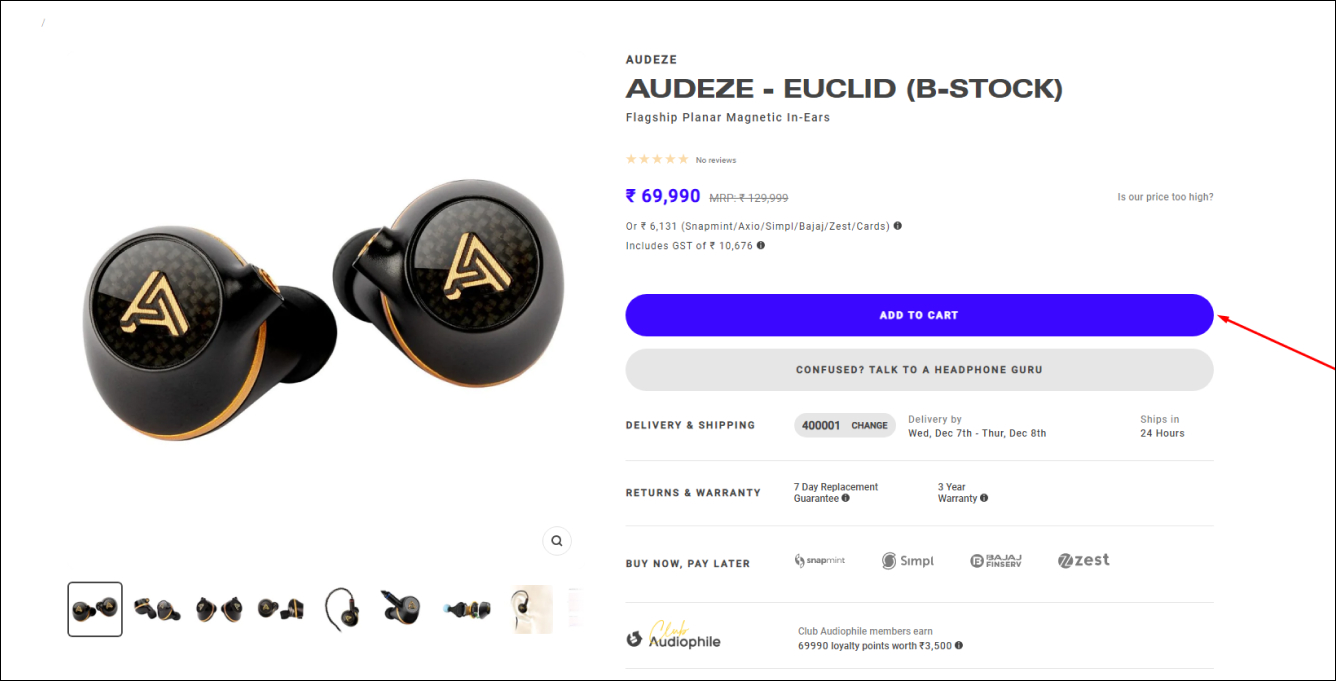
There’s only one button on this product page that attracts the user’s attention: Add to Cart. This CTA button is big, bold, and the only text on the page with a background color.
So, visit your website and go through your product pages. Keep a note that your CTA button must be prominent, bold, and highlighted.
2. Include Social Proof
Doesn’t matter how unique your product is, people will still follow the lead of others. After all, why should they buy a product if no one has tried it?
That’s why you must include social proof on your product pages.
According to the latest study, almost 84% of people trust online reviews. After going through the reviews, 68% of them form an opinion and make a purchase decision.
Here’s another example of this strategy used by a brand offering sunglasses.
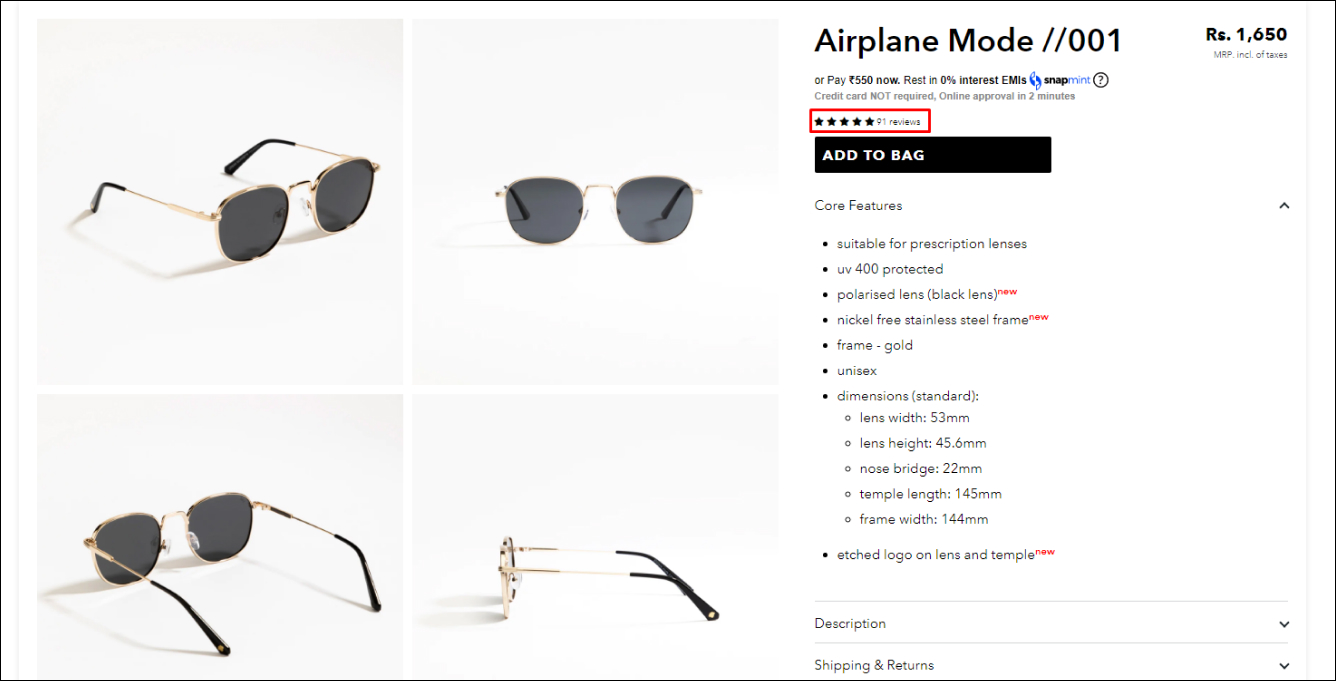
This product has 91 reviews from its customers. Also, see that this information is near the product description.
You can even link the actual reviews to this section. It means if anyone clicks on it, it will drive them to the place where actual reviews are placed.
3. Use Professional Photography
No doubt, online customers depend on product images to make their purchasing decisions.
You can’t rely on your smartphone for taking product pictures. It requires professional photography. So, hire a photographer that conducts photoshoots with professional equipment and software.
On the other hand, ensure that you’re taking the right photos for your product pages.
Let’s understand this with an example.
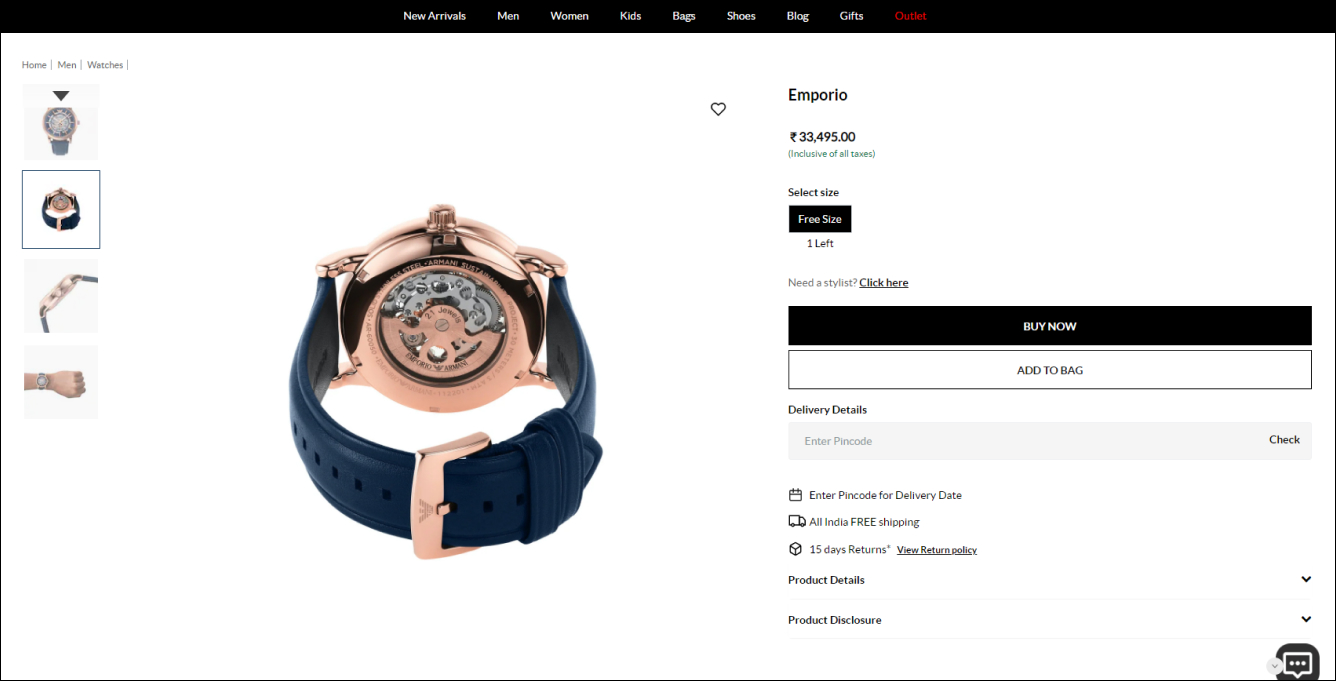
Let’s assume you’re selling a wristwatch. If you put a photo of a watch alone, it won’t impress customers. But if you put it on someone’s wrist, it will give them better insights into how this product will look on their wrist.
Now, this is what great photography is called! They’ve used the right set of images to show how their watch will look on a person’s wrist.
These photographs tell the real story of the product, and such photography should be prioritized.
4. Carefully Create Product Descriptions
This is probably one of the worst mistakes that Shopify merchants make on their product pages. Everything on the product page looks excellent until the description.
Describe your product in brief. That doesn’t mean that you’ve to include long paragraphs. No one, absolutely no one, wants to read huge blocks of text. Keep it short and simple. Try to include bullet points instead of paragraphs.
Look at this product specification from a brand that offers bicycles.
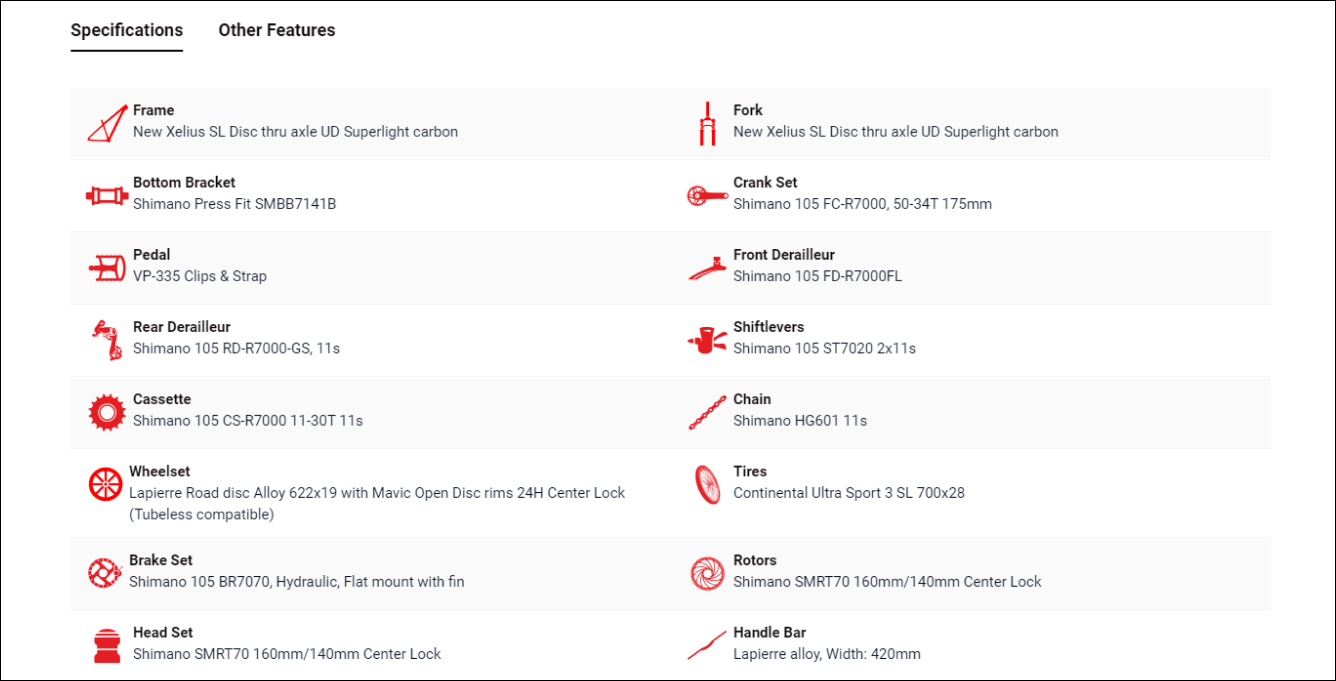
They’ve specifically described everything important for a customer to know before buying it. Also, it has addressed all the concerns that a customer might have.
This kind of product description will encourage customers to purchase through your website.
Check out our latest blog on tips to write product descriptions that persuade!
5. Add Appealing Videos
It’s said that a picture speaks 1,000 words. But have you ever thought about how videos can affect your product page?
No doubt, pictures can allow your customers to get a better understanding of your products. But a video can give them a deep insight into everything.
According to the latest study, 90% of online shoppers say that product videos help process the buying decision. And 70% of marketers say that videos help increase conversion rates.
Go through this example of a product page.

For them, videos play an important role since they’re selling a television. It shows exactly what features this television provides.
Videos are important for your business if you’re selling products that require more explanation. It isn’t necessary if you’re selling a shirt.
If you’re looking to add videos to your Shopify store, checkout our blog!
6. Consider Upselling & Cross-selling
Upselling involves recommending a more premium version of the product a customer is viewing. For instance, if a customer is looking at a basic model of a smartphone, an upsell could involve suggesting an advanced model with more features and better specifications.
Cross-selling, on the other hand, is about recommending complementary products to the one a customer is currently considering. For example, if a customer is looking at a camera, a cross-sell could involve suggesting related accessories like a camera bag or a tripod.
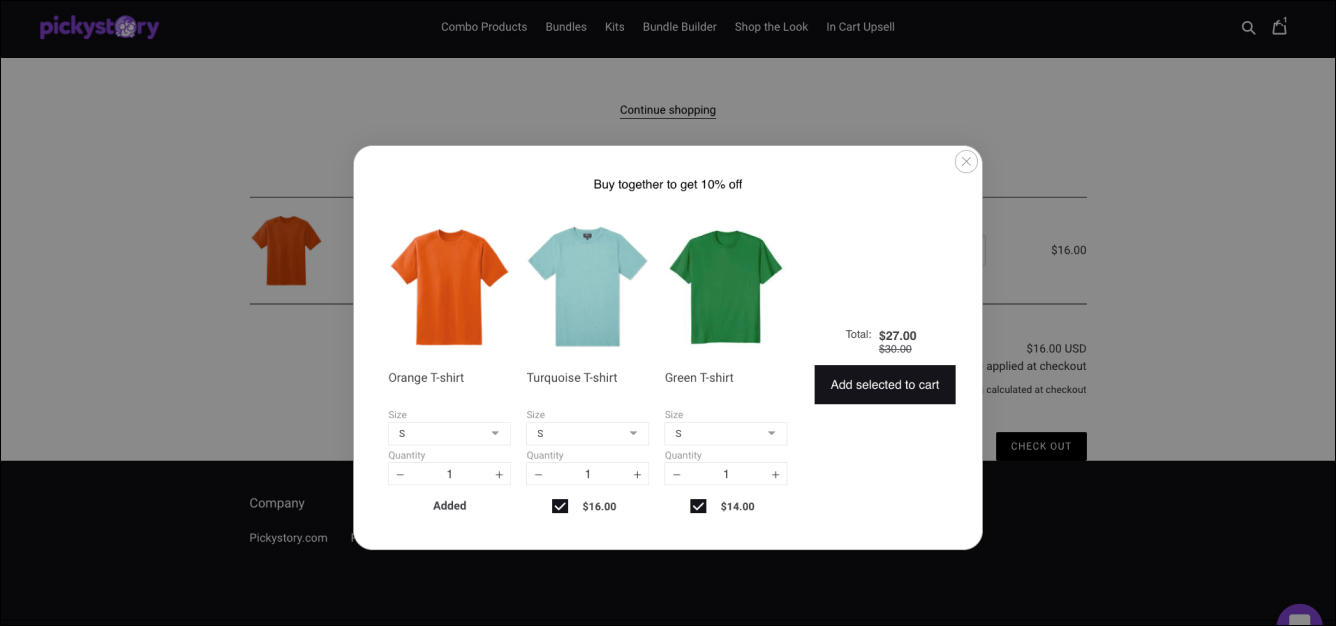
By thoughtfully implementing upselling and cross-selling strategies on your Shopify product pages, you can increase the total purchase value of each customer, potentially boost your profits, and provide a more comprehensive shopping experience by anticipating the related needs of your customers.
7. Include Product Variations
When you offer product variations, you give buyers the option to browse and choose the particular model of the product they want to buy from the product page itself.
If you’re selling shirts, for instance, the variations could include several sizes (S, M, L, XL), as well as different colors (blue, red, green, etc.). Each variation can have its own SKU, price, and inventory level.
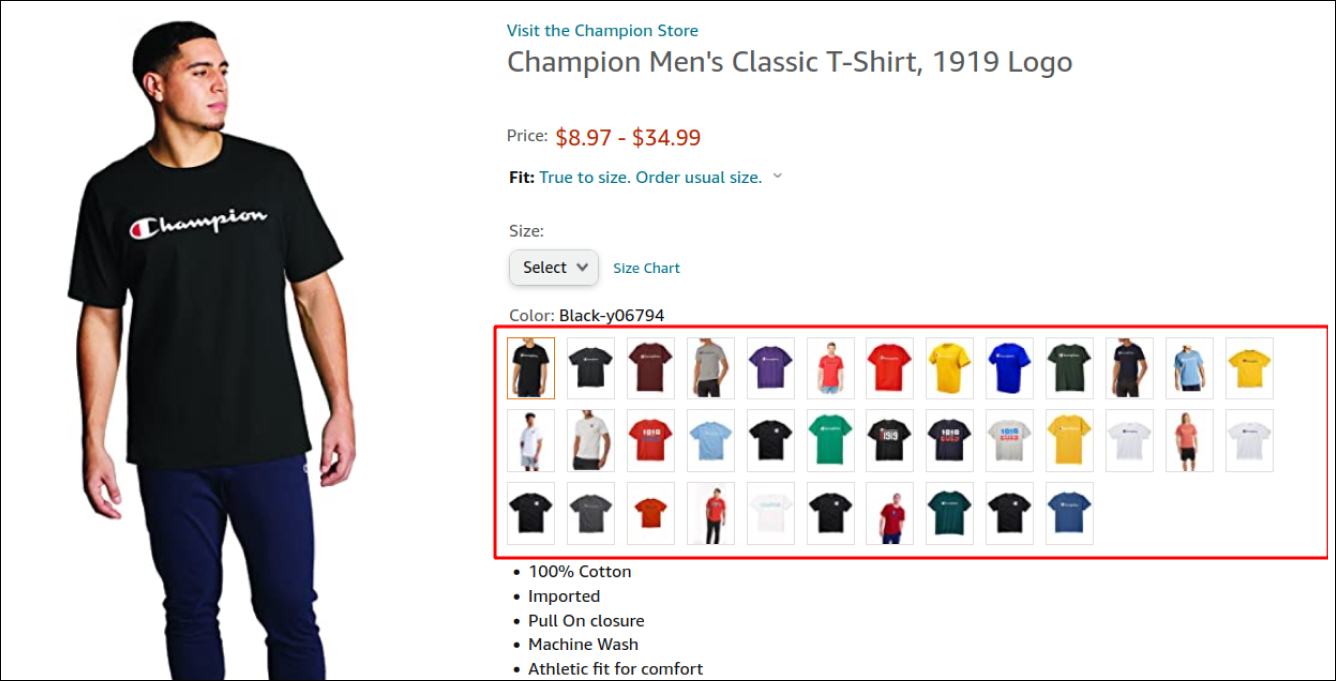
In many ways, this improves the user experience.
- First of all, it streamlines the purchasing process by allowing customers to view all alternatives in one location rather than requiring them to visit different pages for each variant.
- By showcasing the variety of options available, it can also raise the product’s value.
- As customers are more likely to locate a product that suits their unique needs and tastes, it may also help in raising conversion rates.
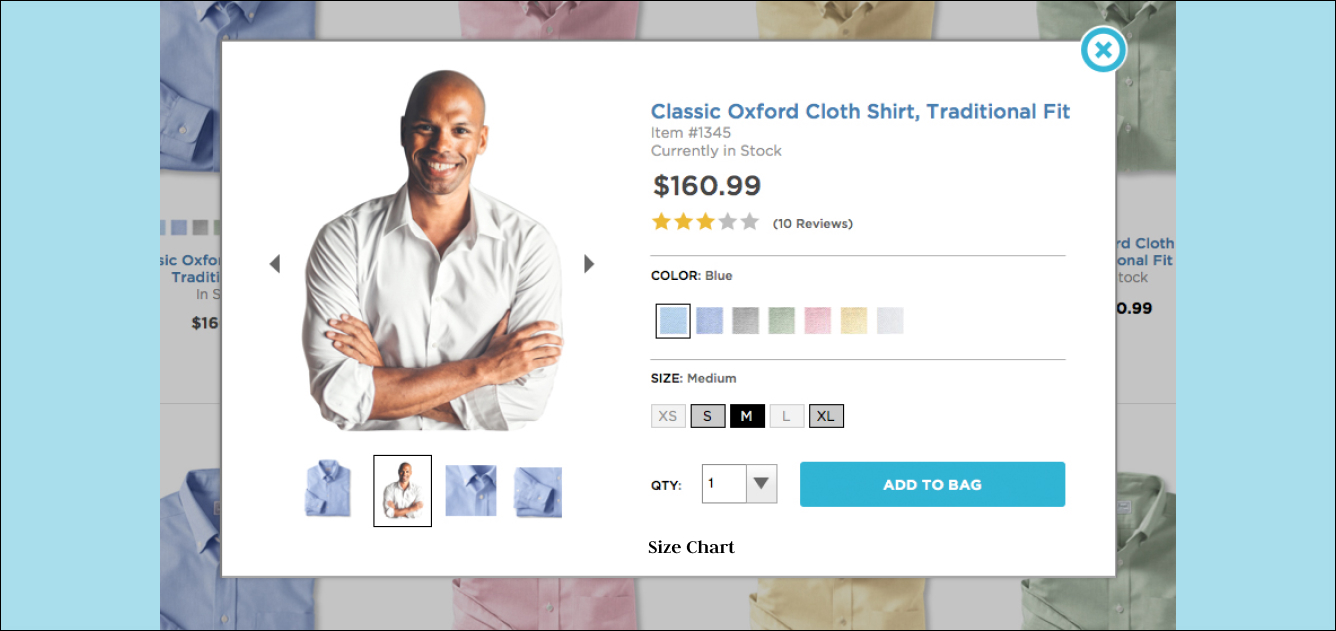
8. Offer Product Size Guide
If you sell things where size is important, like apparel, shoes, or accessories, including a product size guide, is a good method to optimize your product page on Shopify.
A size guide provides detailed information about the measurements of your product, helping customers to understand how it might fit or suit their needs before making a purchase.
Not only does adding a size guide help to increase customer confidence and reduce uncertainty, but it can also significantly decrease the rate of product returns, a common issue in the world of online shopping.
9. Optimize For Search Engines
Shopify SEO involves using relevant keywords in your product title, description, and meta tags to match the terms potential customers are using in their searches.
It also includes using alt text for images, creating a readable URL with keywords, and ensuring your site is mobile-friendly as search engines favor mobile-optimized websites.
Moreover, providing high-quality, unique content and maintaining a well-structured page with internal links can help search engines understand and rank your page better.
Ultimately, an optimized product page can drive more organic traffic to your Shopify store and potentially increase sales.

10. Add Customer Reviews
Adding customer reviews to your Shopify product page can greatly enhance its effectiveness and trustworthiness. Reviews and ratings provide social proof, showing potential customers that other people have purchased, used, and had a positive experience with the product.
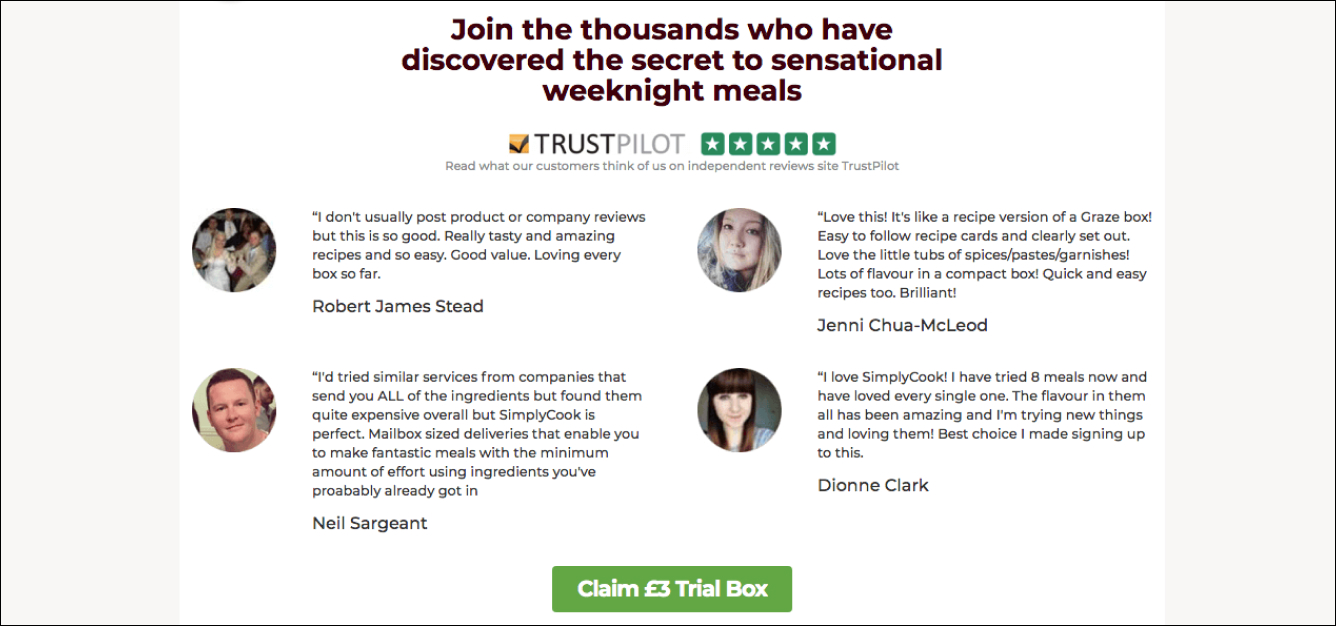
Reviews can also provide valuable information about the product that isn’t covered in your description, such as its durability, real-life functionality, or customer service experiences.
To encourage reviews, consider sending follow-up emails to your customers asking for their feedback after they’ve received and used the product.
11. Make it Mobile-Friendly
Given the significant rise in mobile shopping, it’s crucial that your product pages render correctly and provide an excellent user experience on all screen sizes.
The mobile-friendly design includes ensuring text is readable without zooming, interactive elements like buttons and links are large enough to be tapped with a finger, and images and page elements are structured to fit within a small screen.
A mobile-friendly product page helps you reach and convert a larger audience, as it accommodates the shopping preferences of users who prefer to shop on their mobile devices.
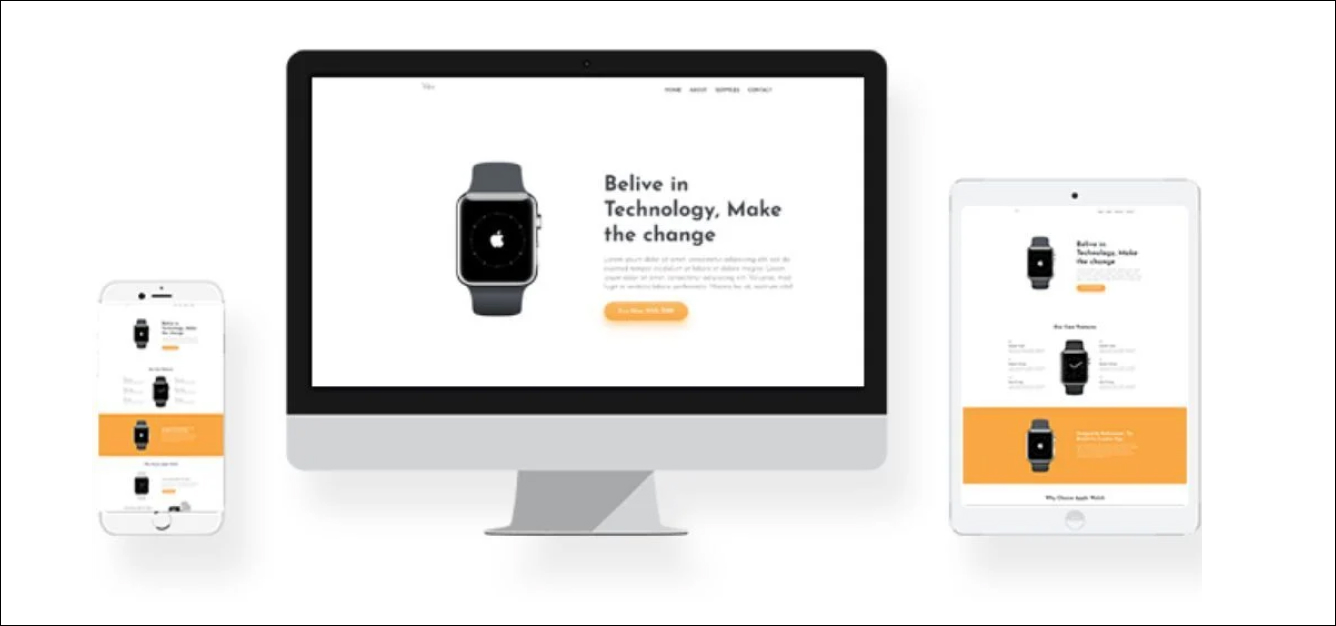
E-commerce Product Pages SEO Tips to Boost Conversion Rates
No doubt, you have a great product and an awesome website, but are you getting enough sales in your store? No? Not yet?
Well, today, it is difficult to reach out to your target audience and encourage them to make purchases from your store. But, with proper strategy in hand, this task can be easier.
Below are some product page SEO tips to optimize your product pages for SEO:
1. Fine-Tune Your Keyword Strategy
Keyword research is a crucial step in optimizing e-commerce product pages for SEO.
By conducting thorough keyword research, you can effectively optimize your e-commerce product pages for the right keywords and reach your target audience. This can lead to higher visibility in search results, increased website traffic, and ultimately, more conversions and sales.
Here are some tips to help you effectively fine-tune your keyword strategy:
- Begin by identifying your target audience and their search behavior. Understand what keywords they might use for your products.
- Focus on long-tail keywords since they are more specific and have lower competition than broad keywords, making them easier to rank for.
- Analyze the keywords your competitors are targeting and consider incorporating relevant keywords into your product pages.
- Consider the user’s intent behind the keyword. Tailor your product pages’ content and keywords to satisfy the user’s intent.
- Regularly review and refine your keyword strategy based on changes in search trends or user behavior.

2. Create Short & Focused Product URLs
Creating short and focused product URLs is an essential aspect of optimizing e-commerce product pages for SEO. It will help you improve your product page’s visibility in search results, increase traffic, higher rankings, and more conversions.
Here are some tips to help you create unique product URLs for your store:
- Aim for URLs that are 50-60 characters or less.
- Incorporate relevant keywords into your product URLs, but avoid keyword stuffing.
- Remove stop words from your product URLs to keep them concise and focused.
- Use hyphens to separate words in your product URLs, rather than underscores or other special characters.
- Use static URLs that reflect the actual content on the page.
- Avoid using multiple URLs for the same product or using different URL structures on different pages.

3. Add User-Generated Content
Adding user-generated content to your product pages helps in SEO and can also help improve your rankings in search engines and ultimately boost conversion rates.
Here are some tips to help add user-generated content to your product pages:
- Display the ratings and reviews of your products on your product pages.
- Use schema markup to add rich snippets to your product pages, which can help highlight ratings and reviews in search engine results.
- Encourage customers to share images of your products on social media and add these images to your product pages.
- Regularly monitor customer feedback and respond promptly to any negative reviews or comments.

4. Optimize Meta Titles & Descriptions
Optimizing meta titles and descriptions is a crucial aspect of optimizing e-commerce product pages for SEO. This way, you can improve the visibility of your product pages in search results, increase CTR, and drive more sales and conversions.
Here are some tips to help you optimize meta titles and descriptions:
- Incorporate relevant keywords into your meta titles and descriptions to signal to search engines what the page is about. However, avoid keyword stuffing.
- Keep them concise and compelling to encourage users to click through to your product page.
- Use persuasive language to entice users to click through to your product page.
- Ensure that each meta title and description are unique across your website since these can negatively impact your SEO.
- Incorporate your brand name into your meta titles and descriptions to improve brand recognition and credibility.

5. Minimize Page Load Times
Minimizing page load times is a crucial SEO strategy for e-commerce product pages. This will help improve user experience, increase the engagement rate, and reduce bounce rates.
Here are some tips to minimize page load times on your product pages:
- Reduce HTTP requests and minimize the number of external files and scripts on your store, and combine and minify files.
- Enable browser caching by specifying how long your website files should be stored in a user’s browser cache.
- Use a CDN by caching your store’s content on multiple servers.
- Use tools like Google PageSpeed Insights or GTmetrix to identify areas for improvement.

6. Write Targeted Product Descriptions
Writing targeted product descriptions is an essential aspect of optimizing e-commerce product pages for SEO.
Customers consider going through product descriptions before making a purchase decision. Thus, ensure that you write descriptions that compel them. Also, it will help you increase visibility on the search engines.
Here are some tips to help you write effective product descriptions:
- Begin by identifying your target audience and their search behavior and craft your product descriptions in the same manner.
- Use persuasive language to highlight the key features and benefits of your products.
- Incorporate relevant keywords into your product descriptions to improve their visibility in search results.
- Keep your product descriptions clear and concise, avoiding long blocks of text.
- Regularly review your product descriptions and make adjustments based on changes in search trends or user behavior.

7. Optimize Your Media Files
Optimizing media files is an important aspect of optimizing e-commerce product pages for SEO. This will help your online store load quickly which will not drive customers away from your store.
Here are some tips to help you optimize your media files on your online store:
- Optimize your images for web use by compressing them without sacrificing quality.
- Use descriptive file names that accurately reflect the content of the image or video.
- Incorporate relevant keywords into your alt text to help search engines understand the content on the page.
- If you use videos on your product pages, consider optimizing them for SEO by using relevant keywords in the video title and description.

E-commerce Product Pages SEO Mistakes
Now that you’re aware of what you must do on your product page to improve SEO, it is now time that we discuss some common product page SEO mistakes that you must avoid.
1. Avoid Duplicate Content
Duplicate content can occur when multiple pages on your website have the same product descriptions or when you copy product descriptions from other websites.
Duplicate content is a common e-commerce product page SEO mistake to avoid because search engines, like Google, typically only display one version of a piece of content in their search results.
2. Don’t Use Product Descriptions from Manufacturer’s Site
One common e-commerce product page SEO mistake to avoid is using product descriptions directly from the manufacturer’s website.
While it may be tempting to use these descriptions since they are often already available, doing so can actually harm your search engine rankings and user experience.
Search engines like Google prioritize unique, high-quality content, and may view your pages as less valuable if they contain duplicate content.
3. Don’t Use the Wrong Type of Structured Data
While structured data can be useful for improving your search engine rankings and visibility, using the wrong type of structured data can actually harm your SEO efforts.
While talking about product pages, you should use structured data that is specifically designed for products, such as the Product schema.
4. Never Miss Out on Internal Linking & Backlinks
Internal linking and backlinks are two important factors that can impact the search engine rankings of your e-commerce product pages. Not taking advantage of these opportunities is a common SEO mistake that e-commerce businesses should avoid.
By leveraging internal linking and backlinks, e-commerce businesses can improve the search engine rankings and visibility of their product pages, ultimately leading to increased traffic, engagement, and sales.
5. Don’t Forget Mobile Optimization
E-commerce businesses should prioritize mobile optimization when designing and updating their product pages.
This can include using responsive design, optimizing images and media for mobile devices, and ensuring that important information is easily accessible on small screens.
By doing so, businesses can improve the user experience for mobile users and potentially improve their search engine rankings and visibility.
Conclusion
Product pages play an important role in your Shopify store.
When a visitor lands on one of your product pages, they are just some clicks away from getting converted into paying customers. Being a Shopify store owner, it is your duty you ensure that your product pages are properly optimized such that it drives sales to your store.
You can use this guide as your reference and ensure that all your product pages have relevant elements required for rocking the stage.
We hope that you’ve gained knowledge on how you can optimize your product pages for boosting conversion rates.
If you need more information, let us know about that by contacting us!
Explore more of our blogs: