
Quick answer: The best web development tools in 2026 are Visual Studio Code (code editor), GitHub (version control and collaboration), Chrome DevTools (debugging), Sublime Text (fast lightweight editing) and Bootstrap (responsive UI). What’s changed in 2026 is the rise of AI coding tools — GitHub Copilot, Cursor, Claude and ChatGPT, and UI generators like v0 and Bolt — which now sit alongside these classics in most professional workflows. Below we cover what each does, when to use it, and how to choose.
What are web development tools?
Web development tools are the software a developer uses to write, test, debug and ship websites and web apps — code editors, browser inspectors, version-control systems, UI frameworks and, increasingly, AI assistants. The right toolkit doesn’t just make you faster; it makes your code cleaner, your bugs easier to catch, and your team easier to collaborate with.
There is no single “best” tool — the best stack depends on what you build. But a few tools have earned a near-universal place in professional web development, and a new category of AI tools has joined them.
How to choose a web development tool
- Fit for your stack: the tool should support your languages, frameworks and platform (e.g. Shopify, React, Node).
- Speed and stability: it should be fast on large projects and not get in your way.
- Ecosystem: a healthy extension/plugin marketplace and active community matter more than any single feature.
- Collaboration: version control, code review and sharing should be first-class.
- Cost: most of the best tools have generous free tiers — start free, pay only when a paid feature earns its keep.
The 5 best classic web development tools in 2026
1. Visual Studio Code — the default code editor
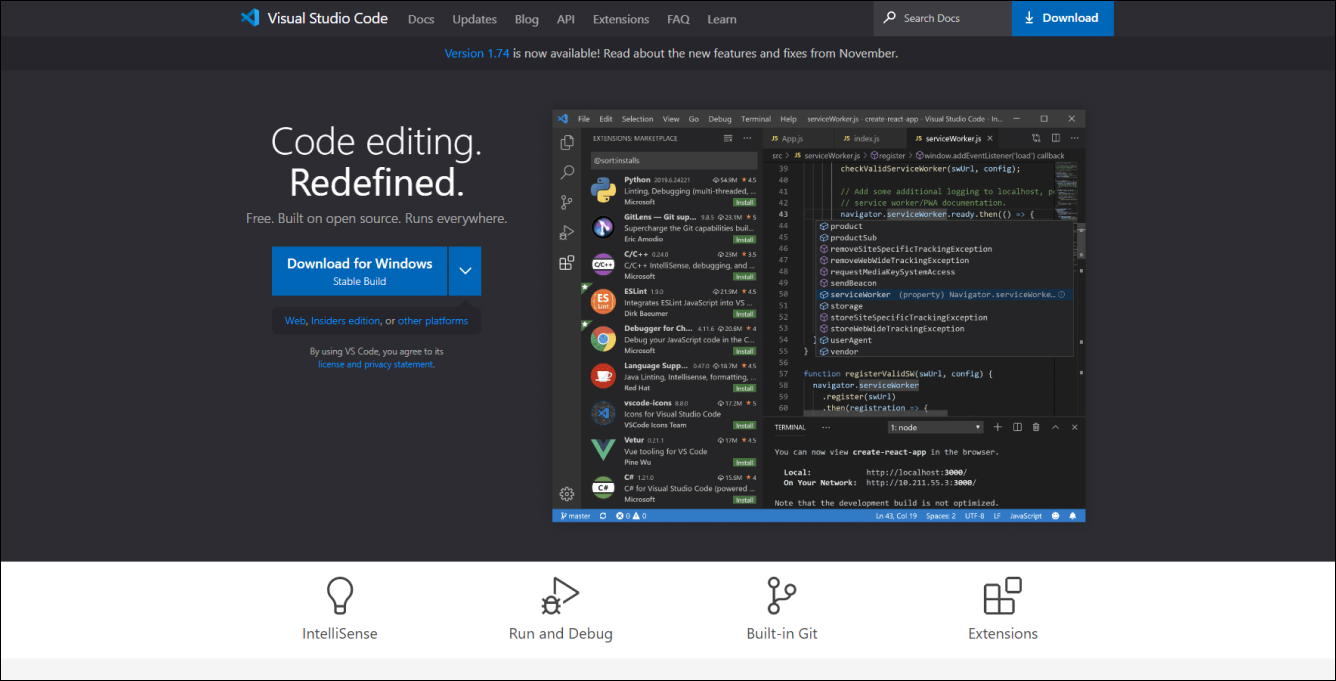
VS Code is the most widely used code editor in the world, and for good reason: it’s free, fast, and endlessly extensible. IntelliSense autocompletion, built-in Git, an integrated terminal and a vast extension marketplace make it the natural home base for almost any web project. Most AI coding tools (including Copilot and Cursor) are built on or around it.
Best for: nearly everyone — your primary editor for HTML, CSS, JavaScript, TypeScript and beyond.
2. GitHub — version control and collaboration
GitHub is where the world’s code lives. Built on Git, it handles version control, pull requests, code review, issue tracking and CI/CD through GitHub Actions. Whether you’re a solo developer keeping a history of your work or a team shipping together, GitHub is the backbone of modern collaboration.
Best for: version control, team collaboration and automating builds and deployments.
3. Chrome DevTools — debugging in the browser

Built into Chrome, DevTools lets you inspect and edit the DOM and CSS live, debug JavaScript, profile performance, audit Core Web Vitals with Lighthouse, and simulate mobile devices and slow networks. For front-end debugging and performance work, it’s indispensable — and free.
Best for: debugging layout and JavaScript, and auditing page speed and Core Web Vitals.
4. Sublime Text — fast, lightweight editing
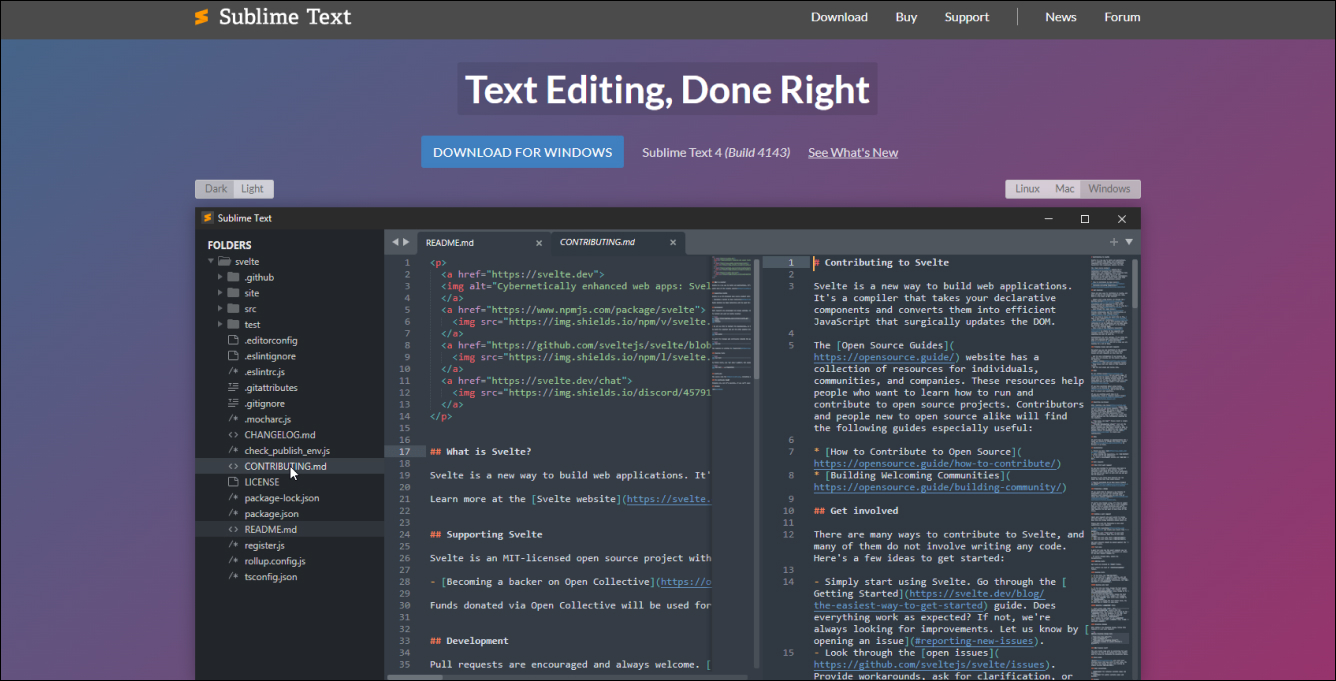
Sublime Text is prized for raw speed. It opens instantly, handles huge files without lag, and its multi-cursor editing and “Goto Anything” navigation are still best-in-class. When you want a snappy editor for quick edits or working on massive files, Sublime shines.
Best for: fast edits, very large files, and developers who prioritise speed and a minimal interface.
5. Bootstrap — responsive UI fast

Bootstrap is a front-end framework of ready-made, responsive components — grids, navbars, buttons, forms and more. It lets you stand up a clean, mobile-friendly layout quickly without writing CSS from scratch. (Many teams now pair or replace it with utility-first CSS like Tailwind, but Bootstrap remains a fast, dependable choice.)
Best for: quickly building responsive, consistent UI — especially prototypes and admin interfaces.
The AI web development tools developers actually use in 2026
The biggest shift since this guide was first written is AI. These tools don’t replace the classics — they sit inside them and speed up the repetitive parts of coding. Here are the ones professional developers genuinely reach for.
GitHub Copilot — AI autocomplete in your editor
Copilot suggests whole lines and functions as you type, right inside VS Code and other editors. It’s excellent for boilerplate, tests, and “I know what I want, just write it faster” moments. Treat its output as a fast first draft you review, not gospel.
Best for: in-line code completion and reducing boilerplate.
Cursor — the AI-first code editor
Cursor is a VS Code-based editor built around AI. Beyond autocomplete, it can edit across multiple files, answer questions about your whole codebase, and apply multi-step changes from a single prompt. For developers who want AI woven through the editing experience, it’s become a favourite.
Best for: AI-assisted refactoring and working across a whole codebase.
Claude and ChatGPT — your coding pair-thinker
General-purpose AI assistants like Claude and ChatGPT are superb for explaining unfamiliar code, debugging tricky errors, planning architecture, writing documentation and generating example snippets. Used well, they shorten the gap between “I’m stuck” and “I understand.”
Best for: debugging, explanations, planning and documentation.
v0 by Vercel — UI from a prompt
v0 generates React and Tailwind UI components from a text description (or an image), giving you production-ready front-end code to drop into a project. It’s a fast way to get from idea to a working interface.
Best for: generating front-end components and rapid UI prototyping.
Bolt and Lovable — full apps from a prompt
Tools like Bolt and Lovable take prompt-to-app a step further, scaffolding a working full-stack app in the browser that you can refine and export. They’re great for prototypes, MVPs and validating an idea before investing in a full build.
Best for: prototypes and MVPs you want running quickly.
Classic vs AI tools: a quick comparison
| Tool | Category | Best for | Free tier? |
|---|---|---|---|
| Visual Studio Code | Code editor | Your main editor for any web project | Yes (free) |
| GitHub | Version control | Collaboration, code review, CI/CD | Yes |
| Chrome DevTools | Debugging | Front-end debugging, performance audits | Yes (free) |
| Sublime Text | Code editor | Fast edits, very large files | Free trial |
| Bootstrap | UI framework | Responsive UI, fast | Yes (free) |
| GitHub Copilot | AI assistant | In-line code completion | Free/paid tiers |
| Cursor | AI editor | Codebase-wide AI editing | Free/paid tiers |
| Claude / ChatGPT | AI assistant | Debugging, planning, docs | Free/paid tiers |
| v0 by Vercel | AI UI generator | Front-end components from a prompt | Free/paid tiers |
| Bolt / Lovable | AI app builder | Prototypes and MVPs | Free/paid tiers |
Bonus: keep your dev workflow organised with Dyzo

Great tools speed up the coding; Dyzo keeps the project on track. It’s a project and task-management tool built for development teams — task-wise time logs, progress visibility and client transparency in one place. If your bottleneck isn’t writing code but coordinating who’s doing what (and showing clients real progress), a workflow tool like Dyzo is the missing piece.
Frequently asked questions
What is the best web development tool for beginners?
Visual Studio Code. It’s free, beginner-friendly, works on every platform, and grows with you — the same editor beginners and professionals use daily.
Which AI tool is best for coding in 2026?
For in-editor autocomplete, GitHub Copilot or Cursor. For explanations, debugging and planning, Claude or ChatGPT. Most developers use a combination rather than just one.
Do AI tools replace web developers?
No. AI tools speed up coding and remove repetitive work, but they still need a developer to architect the system, review the output, catch mistakes and make judgement calls. They’re an amplifier, not a replacement.
Are these web development tools free?
Most have generous free tiers — VS Code, Chrome DevTools and Bootstrap are entirely free, and GitHub, Copilot, Cursor and the AI assistants all offer free plans to start with.
Conclusion
The fundamentals haven’t changed: a great editor (VS Code), solid version control (GitHub), strong debugging (Chrome DevTools) and fast UI (Bootstrap) still form the core of professional web development. What’s new in 2026 is the AI layer on top — Copilot, Cursor, Claude, ChatGPT, v0 and Bolt — that makes a skilled developer dramatically faster. Pick the classics as your foundation, add the AI tools that fit how you work, and keep the project organised with a workflow tool.
Need a team that uses all of this to build and grow your store? Explore our custom Shopify development and AI for ecommerce services, or book a free strategy call.